 Recorder Hero
 › Recorder library › A short history of the recorder
A short history of the recorder
The recorder's story in five minutes: medieval beginnings, Renaissance consorts, Baroque stardom, a long sleep, and its 20th-century revival as the instrument children learn first.
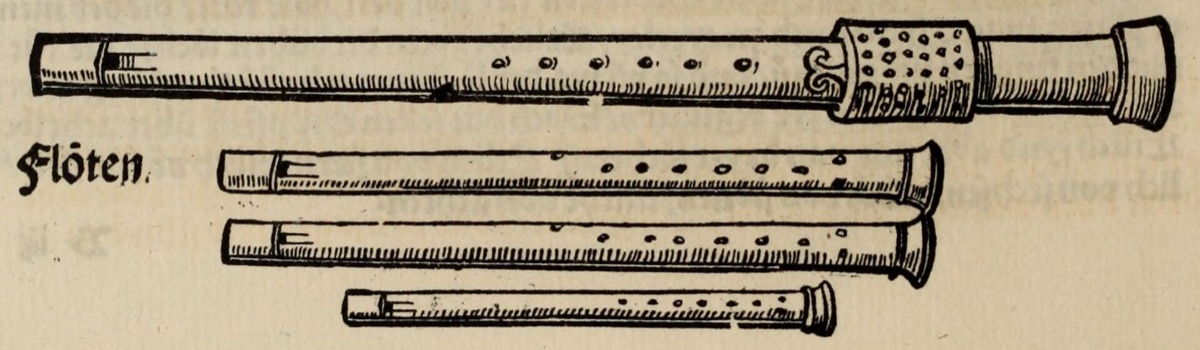
The recorder is one of the oldest instruments still played the same way it was centuries ago: you blow into a mouthpiece, and a sharp edge splits the air to make the sound. There's no reed and no special lip shape to learn, which is exactly why it's so easy to start, and why it has lasted.
Medieval beginnings
Recorders were already being played in the Middle Ages. A few instruments from the 14th and 15th centuries have survived, found in places like the old town of Dordrecht in the Netherlands, and they look remarkably like a modern recorder: a straight tube with seven finger holes on the front and a thumb hole at the back. The name probably comes from the old English verb "to record", which once meant to practise a tune, or to warble like a bird.
The Renaissance: a family of recorders
In the 1500s recorders were made in families of different sizes, from small and high to big and low, so a group of players could cover every part of the music together, like a choir. This group was called a consort. The first printed books about instruments show them, and in 1535 the Venetian musician Silvestro Ganassi published Fontegara, a whole method for playing the recorder, with fingerings and ornaments.
The Baroque: star of the orchestra
Towards the end of the 1600s the recorder was redesigned: it was made in three joints, with a narrowing bore that gave it a sweeter, stronger sound. By around 1690 the alto recorder in F had become the main solo recorder (The Met). This was its golden age: Bach, Handel, Telemann, Vivaldi and many others wrote music for it. Read about the composers who loved the recorder ›
A long sleep
In the 1700s the louder, more flexible transverse flute (the silver flute's ancestor) took over the recorder's place in orchestras, and for more than a century the recorder was largely forgotten (Yamaha).
The 20th-century revival
The recorder came back thanks to the early-music revival. Arnold Dolmetsch, a French-born instrument maker living in Haslemere, England, made his first recorder around 1918–1919, copying a historical instrument. A complete consort of his recorders was heard at the Haslemere Festival in 1926, and his son Carl carried the work on, promoting the recorder for teaching music in schools (Wikipedia: Arnold Dolmetsch).
From there, the recorder found its modern role: cheap, sturdy and easy to start, it became the first instrument of millions of schoolchildren, while professional players brought the old repertoire, and brand-new music, back to concert halls. See where the recorder is played today ›
More from the recorder library
- Why a camera and a microphone are the best way to learn the recorderHow a microphone that hears every note and a camera that sees your hands give beginners instant feedback on the recorder, and why the recorder is a great first instrument.
- Composers who loved the recorderFrom Bach's Brandenburg Concertos to Vivaldi's dazzling concertos and modern pieces by Hindemith and Britten: the great composers who wrote for the recorder.
- The recorder todayWhere the recorder is played today: the classroom, early-music ensembles, new music, famous pop and rock songs, and a big online community of players.
- What to learn after the recorderMastered the recorder? The instruments that are closest to it, from the alto recorder and tin whistle to the flute, saxophone and clarinet, and what changes with each.
← Recorder Hero home · All articles · Play